From Message to Emotion
In today’s saturated markets, customers are no longer persuaded by slogans—they’re moved by stories. And nothing tells a story better than art. When a brand embraces creative expression, it opens a direct emotional channel to its audience. Instead of describing values, it lets people feel them. A brushstroke, a texture, a gesture—these become words in a language of emotion that transcends marketing.
When the Artwork Speaks for the Brand
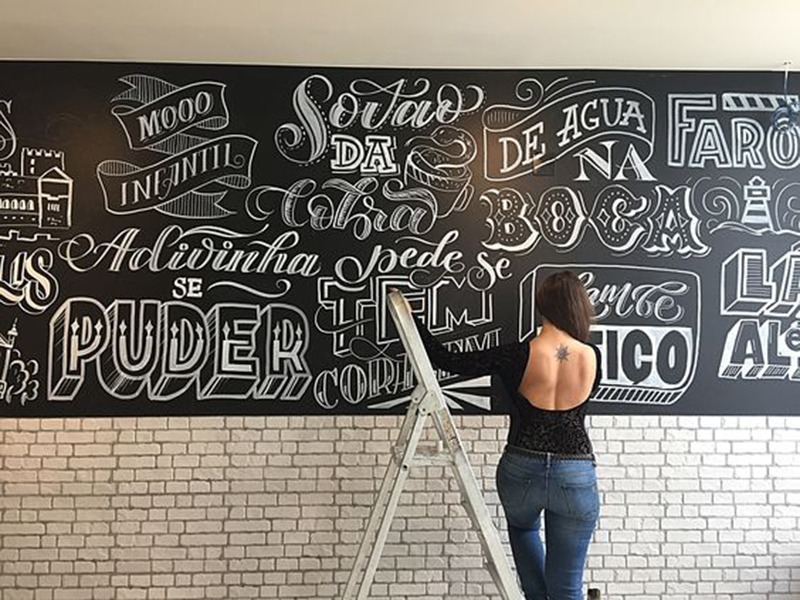
The most powerful brand storytelling happens when art and product meet. A live painting that reinterprets a brand’s colors, a sculptural installation inspired by its emblem, or a personalization moment that turns an item into a one-of-a-kind piece—all these acts turn products into emotional icons. The customer no longer sees an object of consumption, but a symbol of connection.
The Power of Live Creation
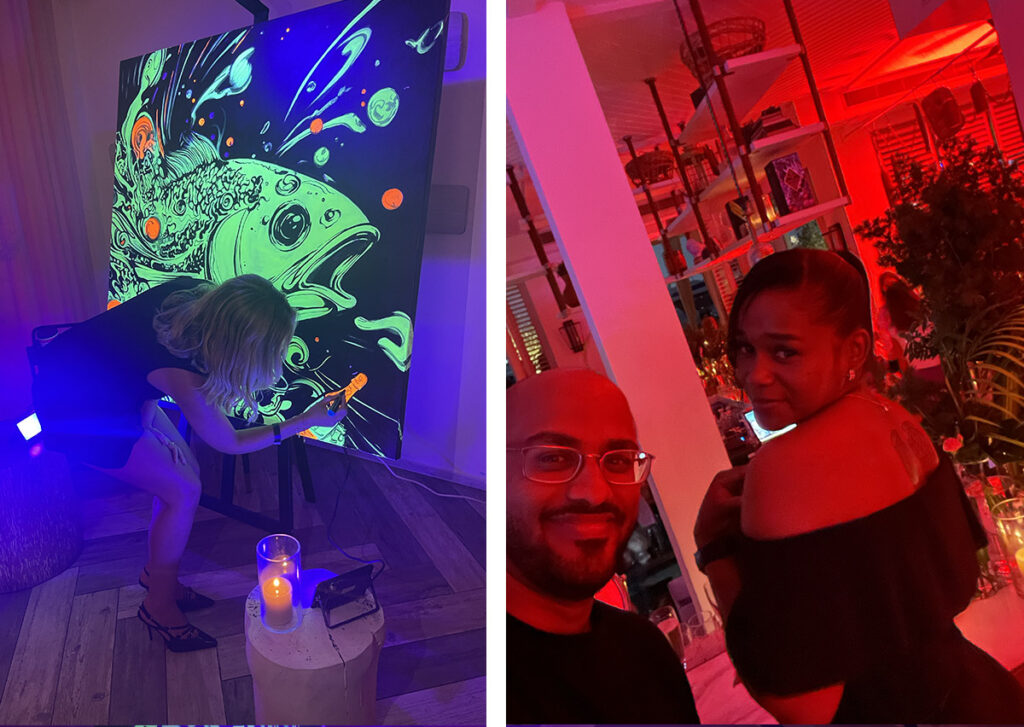
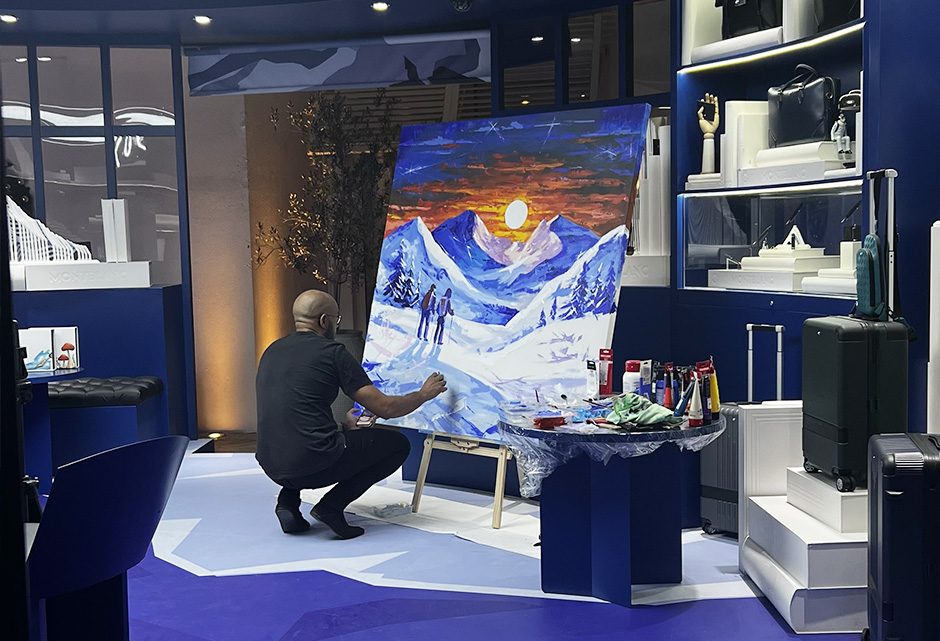
Watching something being created in real time triggers fascination and trust. It’s proof of authenticity. When an artist paints, engraves, or sculpts inside a boutique, the brand becomes human again—alive, imperfect, and deeply relatable. This is emotional branding at its most tangible form: a story unfolding before the eyes of the audience.
Beyond Aesthetics: A Strategy of Meaning
Art doesn’t just beautify—it clarifies. It distills complex brand messages into emotional experiences that customers instantly understand. A single creative act can express values like craftsmanship, heritage, or innovation more effectively than a full campaign. In a world where attention is the new currency, this kind of storytelling cuts through the noise.
Art and the Future of Retail
The rise of retailtainment in Dubai proves that emotion is the new metric of success. Brands that integrate art into their environments create spaces where people don’t just shop—they connect, share, and remember. By placing creativity at the heart of their narrative, they make every visit a moment of discovery.
A Living Story
Every artwork created within a brand’s space becomes part of its story. It lingers in photos, in memory, in conversation. Over time, these fragments build a mythology—a living narrative that keeps the brand culturally relevant and emotionally alive.
Art doesn’t replace storytelling. It is storytelling—just in a purer, more human form.
Related Posts
The Role of Monograms in Reinforcing Brand Identity
In an era where brands strive to stand…
Unlimited world of creativity and colors in Jumeirah parking
An artistic revolution has clearly been…